Contents
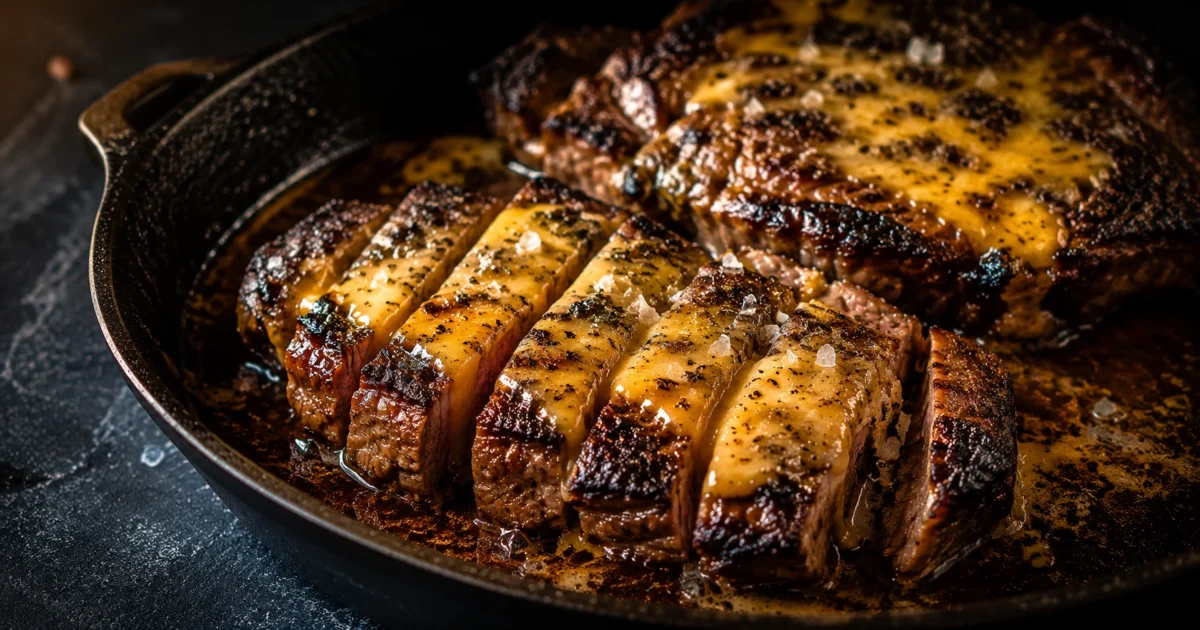
Made this on a Tuesday with one ribeye, a block of cheddar and a cast iron pan that hadn’t been washed since Sunday. Twenty minutes. One pan. The kind of dinner that makes you wonder why you ever complicated things beyond this. A ribeye seared until the crust is almost black at the edges and the inside is still deeply pink and warm, rested and sliced, then returned to the pan with melted sharp cheddar pooling into the meat juices below. That’s it. That’s the whole recipe. And it is one of the most satisfying things you will ever eat.
The carnivore way of eating strips everything back to the most fundamental version of a meal — animal protein, animal fat, nothing added that doesn’t need to be there. What it reveals, when executed correctly, is that beef at its best needs almost nothing to be extraordinary. A ribeye is one of the most flavourful cuts of beef that exists — the fat marbling through the muscle bastes the meat from the inside as it cooks, producing a richness and depth that leaner cuts can never replicate. Seared in a smoking hot cast iron pan with nothing but its own fat, it reaches a level of flavour that most restaurant kitchens spend considerable effort trying to approximate.
The cheddar is the one addition that elevates this from a great steak to something else entirely. Sharp aged cheddar melted directly over the sliced ribeye — pooling in the cut surfaces, mixing with the meat juices, setting slightly at the edges where it meets the hot pan — creates a sauce that requires no making. The pan does everything.
Why You’ll Love This Recipe
The one-pan carnivore cheddar ribeye skillet is the purest expression of the carnivore comfort food philosophy. It is fast — twenty minutes including resting time. It is simple — one pan, two ingredients plus salt. It is deeply satisfying in a way that no plant-based meal can replicate — the combination of beef fat, muscle protein and aged dairy fat produces a satiety that lasts hours. And it is genuinely, completely delicious without any compromise, substitution or nutritional calculation required. Zero carbohydrates. Over 65 grams of protein per serving. The carnivore dinner that needs nothing else.
Ingredients
Serves 2
- 2 ribeye steaks, approximately 300g (10.5 oz) each, at least 3cm (1.2 inches) thick
- 150g (5.3 oz) sharp aged cheddar, sliced or grated
- 2 tsp fine sea salt
- 1 tsp freshly cracked black pepper
- 1 tbsp beef tallow or unsalted butter (optional — only if the ribeye is very lean)
- Flaky sea salt to finish
Method
Step 1 — Bring to room temperature
Remove the ribeye steaks from the refrigerator 30 minutes before cooking. Cold steak goes into a hot pan unevenly — the outside overcooks before the inside reaches temperature. A room temperature steak cooks evenly from edge to centre.
Step 2 — Season
Pat the steaks completely dry with paper towels — surface moisture is the enemy of a proper crust. Season generously on both sides and the edges with fine sea salt and freshly cracked black pepper. Press the seasoning firmly into the surface.
Step 3 — Get the pan smoking
Place a cast iron skillet over the highest heat your stove produces. Leave it for 3 to 4 minutes — longer than you think is necessary. The pan is ready when a drop of water dropped onto the surface evaporates instantly. No oil is needed unless the ribeyes are very lean — a well-marbled ribeye renders enough fat to self-baste from the first moment of contact.
Step 4 — Sear the steaks
Place the steaks in the smoking pan. Do not touch them — not to move, not to press, not to check. Leave them completely undisturbed for 3 to 4 minutes until a deep mahogany crust forms on the bottom. Flip once. Sear the second side for 2 to 3 minutes for medium-rare. In the final minute stand the steaks on their fat cap edge using tongs — 60 seconds renders the fat cap and adds a layer of flavour to the pan juices below.
Step 5 — Rest
Remove the steaks to a warm board and rest for 5 minutes — this is not optional. Resting allows the muscle fibres to relax and reabsorb the juices that have been pushed to the surface by the heat. A steak cut immediately after cooking loses most of its juices onto the board. A properly rested steak keeps them inside.
Step 6 — Slice and return
Slice each ribeye against the grain into thick 1.5cm slices. Return the slices to the cast iron pan — still hot, still over low heat. Lay the cheddar slices or scatter the grated cheddar directly over the warm steak slices. Cover the pan with a lid or foil for 60 to 90 seconds until the cheddar is completely melted and pooling into the meat juices below. Finish with flaky sea salt. Serve directly from the pan.
Tips for the Perfect Carnivore Cheddar Ribeye Skillet
The pan must be properly smoking. This is the single most important instruction in the recipe. A crust on a ribeye forms in the first 30 seconds of contact with an extremely hot surface. A pan that is merely warm produces a grey, steamed exterior with no crust and no flavour development. Three to four minutes of preheating on the highest available heat is the minimum.
Choose well-marbled ribeye. The fat marbling through the ribeye muscle is what makes this cut worth the premium price. A lean ribeye is a lesser experience. Look for visible white fat running through the red muscle — the more of it the better.
Use sharp aged cheddar. Mild cheddar melts but contributes little flavour. A sharp aged cheddar — 12 months minimum — has the intensity to hold its own against the deep flavour of a seared ribeye. The sharpness of the cheese against the richness of the beef is the combination that makes this dish what it is.
Rest before slicing. Every minute of resting produces a measurably juicier steak. Five minutes minimum. The board should show almost no pooled juice after a properly rested ribeye — they are all still inside the meat where they belong.
Variations Worth Trying
Smoked gouda version. Replace the sharp cheddar with smoked gouda. The smokiness amplifies the char on the ribeye crust and produces a flavour combination that is deeper and more complex than the original.
Butter basted version. In the final minute of searing add 2 tablespoons of butter, 2 crushed garlic cloves and a sprig of rosemary to the pan. Tilt the pan and baste the steaks continuously with the foaming butter. Then proceed with the cheddar as normal. Not strictly carnivore but extraordinary.
Double cheese version. Layer sharp cheddar and gruyère in equal amounts over the sliced ribeye. The gruyère melts more smoothly and adds a nutty sweetness that complements the cheddar’s sharpness beautifully.
Make-Ahead and Storage
This is a dish designed to be eaten immediately — a ribeye with melted cheddar does not improve with time and does not store well without losing everything that makes it worth eating. Leftover sliced ribeye keeps refrigerated for up to 2 days — reheat gently in a covered pan over low heat with a splash of beef stock or water to prevent drying. Add fresh cheddar as it reheats. Do not microwave — it toughens the meat irreversibly.
What to Serve Alongside
On a pure carnivore protocol — nothing. The ribeye and cheddar are entirely complete. For those eating carnivore-adjacent — a simple rocket salad dressed with beef tallow and a splash of red wine vinegar alongside adds freshness without compromising the spirit of the meal. Bone broth warmed in a mug alongside is the carnivore accompaniment that makes the whole meal feel ceremonial. Extra butter alongside for additional fat if needed to hit your daily targets.
The Dinner That Needs Nothing Else
Some recipes exist to prove a point. The one-pan carnivore cheddar ribeye skillet proves that eating carnivore is not boring, not restrictive and not a compromise of any kind. It is a ribeye. It is aged cheddar. It is a cast iron pan and twenty minutes. It is one of the most genuinely satisfying dinners that exists — zero carbohydrates, over sixty-five grams of protein, and a flavour that makes the idea of needing anything else on the plate feel genuinely unnecessary.
Prep time: 5 minutes | Rest time: 30 minutes (room temp) | Cook time: 10 minutes | Resting: 5 minutes | Total: 50 minutes | Serves: 2
